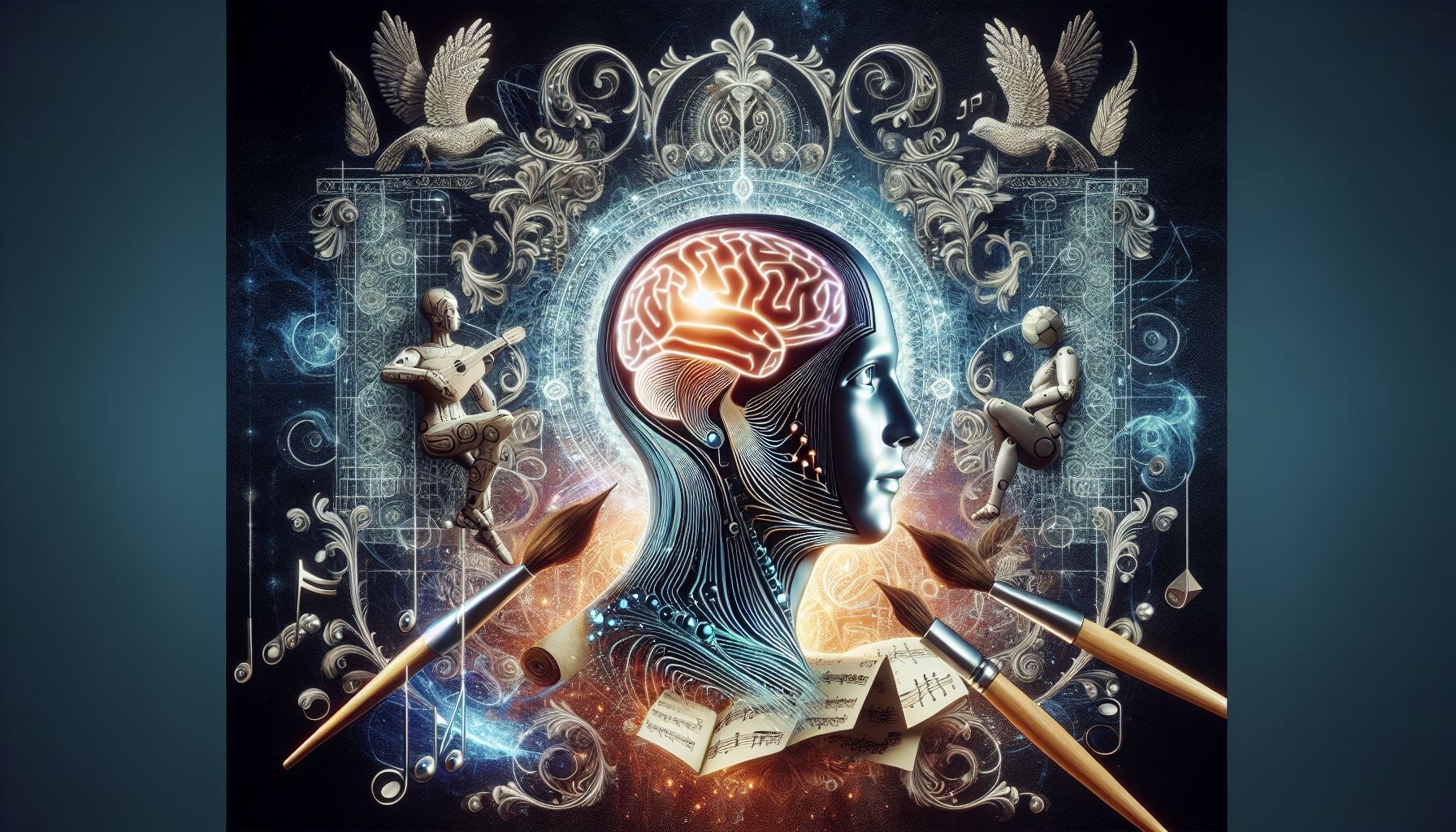
Hey tech enthusiasts, today I’m diving into a topic that’s changing art and science in ways Da Vinci would have admired—AI in creative arts. I’m talking about the kind of tech that works with human creativity, not some dystopian Skynet scenario, so grab a latte, get cozy, and let me take you through this wild world.
The AI Brushstroke Revolution
Picture this: you’re strolling through an art gallery featuring paintings so moving they bring tears to your eyes. You’re blown away, then later learn that the artist isn’t a person but an algorithm. Enter GANs, or Generative Adversarial Networks. These clever algorithms have completely changed digital art, turning code into canvases.
GANs work like this: imagine a painter and a critic, but both are computers. The “painter” creates, and the “critic” evaluates. Over time, they push each other to create work that rivals traditional art forms. This process cranks out art at crazy speed and makes you question what separates human and machine-made art.
While some traditionalists might scoff at the idea, let’s face it—AI doesn’t get tired or run out of inspiration. It’s like having a paintbrush that never dries up, changing not just how we make art but what we think art can be!
Not Just Paintings: Expanding the Palette
Okay, you might say, AI can “paint”—but what else? How about composing symphonies, writing stories, or building virtual worlds? Companies like Amper Music are already letting us remix AI-composed music, giving us a creative partner rather than just competition. AI’s ability to understand complex emotions through data is like Beethoven having an infinite orchestra at his disposal.
Let’s talk storytelling for a second. We’ve seen AI helping with scriptwriting, opening up endless possibilities for plot twists or character development. AI doesn’t have a comfort zone—it can create narratives that break all the rules, pushing human writers to think way outside the box.
The Creative Collaborator or Cultural Usurper?
Now, I hear some of you whispering, “Is AI taking over the art world?” I get it; it’s a fair worry. But maybe we’ve been looking at this whole human-versus-machine thing wrong, like it’s winner-take-all. The reality? AI is more creative partner than replacement.
Think of AI as your quirky studio buddy who always brings fresh ideas to the table—maybe even too many ideas sometimes. It doesn’t replace those gut feelings we humans get, but it amplifies what we can do, suggesting things we might miss when we’re stressed or burned out.
Critics aren’t ignoring this shift either. Art exhibitions now regularly feature AI-generated pieces, with whole new competition categories celebrating this blend of art and technology. It’s this fascinating back-and-forth between human creativity and digital imagination.
Challenges of the New Age
But let’s be honest. It’s not all sunshine and digital brushstrokes. AI’s entrance into the art world creates real problems, like tricky ethical questions and copyright nightmares. Who owns AI art? The person who wrote the code, or whoever fed it data? These puzzles are everywhere, leaving artists, ethicists, and lawyers scratching their heads.
Plus, AI art quality depends entirely on its training data. Feed it biased or limited stuff, and you’ll get repetitive or skewed results. We need to make sure our AI tools get a well-rounded education, like giving them a taste of the world’s entire art buffet.
Painting the Future with Pixels and Possibilities
Looking ahead, AI’s role in creative arts isn’t some passing fad—it’s here to change everything. Imagine custom art that shifts in real-time based on your mood. Or public installations that pulse with the city’s energy, creating experiences that were impossible before AI’s computational power.
Whether we like it or not, we’re entering a new Renaissance, equipped with tools Da Vinci couldn’t have dreamed of. Your creative journey now includes digital magic, giving us not just new brushes but entirely new canvases. It’s time we embrace this partnership—making art bigger than what either humans or machines could create alone.
So next time you hear a beautiful symphony or see mesmerizing digital art, pause for a minute. That might just be humanity speaking through the zeros and ones, blending tradition with innovation.
Alright, that’s my take for today, folks. What do you think? Is AI the next Van Gogh, or more like a fancy paint-by-numbers kit in the great gallery of life? Let me know; I’m curious to hear your thoughts. Until next time, stay curious, stay creative.